
Grief support
Toxic Positivity: Grief Edition
We define toxic positivity as the excessive and ineffective over-generalisation of a happy, optimistic state across all situations. The process, while well intentioned, results in the denial, minimisation and invalidation of the authentic human emotional experience.
Memory Cremation Urns · 4 August 2020 · 4 min read
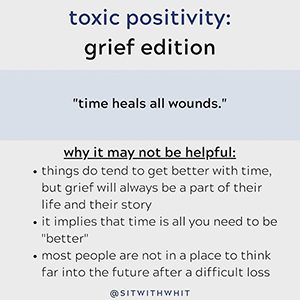
"Time heals all wounds"
Why it may not be helpful:
- Things do tend to get better with time, but grief will always be part of their life and story.
- It implies that time is all you need to be "better".
- Most people are not in a place to think far into the future after a difficult loss.
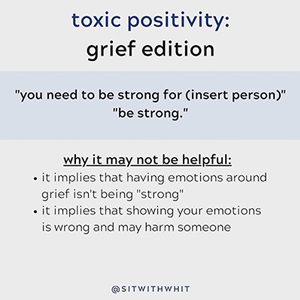
"You need to be strong."
Why it may not be helpful:
- It implies that having emotions around grief isn't being "strong".
- It implies that showing your emotions is wrong and may harm someone.
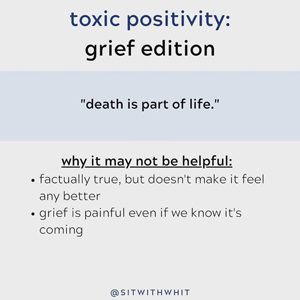
"Death is part of life."
Why it may not be helpful:
- Factually true, but it doesn't make anything feel better.
- Grief is painful even when we know it's coming.
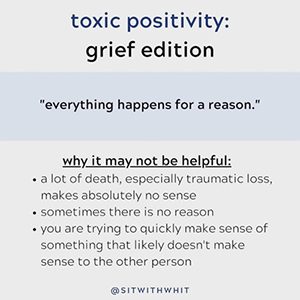
"Everything happens for a reason."
Why it may not be helpful:
- A lot of death, especially traumatic loss, makes absolutely no sense.
- Sometimes there is no reason.
- You are trying to quickly make sense of something that likely doesn't make sense to the other person.
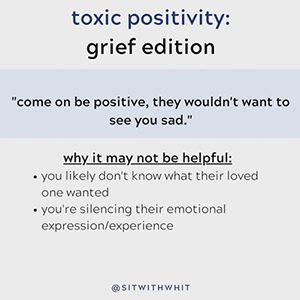
"Come on, be positive — they wouldn't want to see you sad."
Why it may not be helpful:
- You likely don't know what their loved one wanted.
- You're silencing their emotional expression and experience.
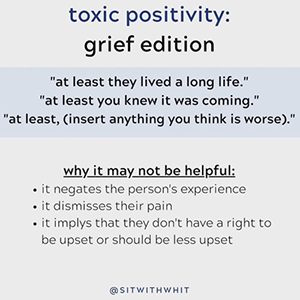
"At least…"
"At least they lived a long life." "At least you knew it was coming." "At least" anything you think is worse.
Why it may not be helpful:
- It negates the person's experience.
- It dismisses their pain.
- It implies they don't have a right to be upset, or should be less upset.

What to do instead
You do not have to fix anything. "I don't know what to say, but I'm here" is worth more than any silver lining.
Say the person's name, offer something specific, and let the grieving person feel exactly what they feel.
Common questions
- Is it wrong to try to cheer someone up?
- Not at all — the problem is only when optimism is used to shut down honest feelings. Company and listening help more than a positive spin.
- What should I say instead?
- Something honest and small: "I'm so sorry." "I remember when she…" "I'm bringing dinner Thursday." Specific beats profound.